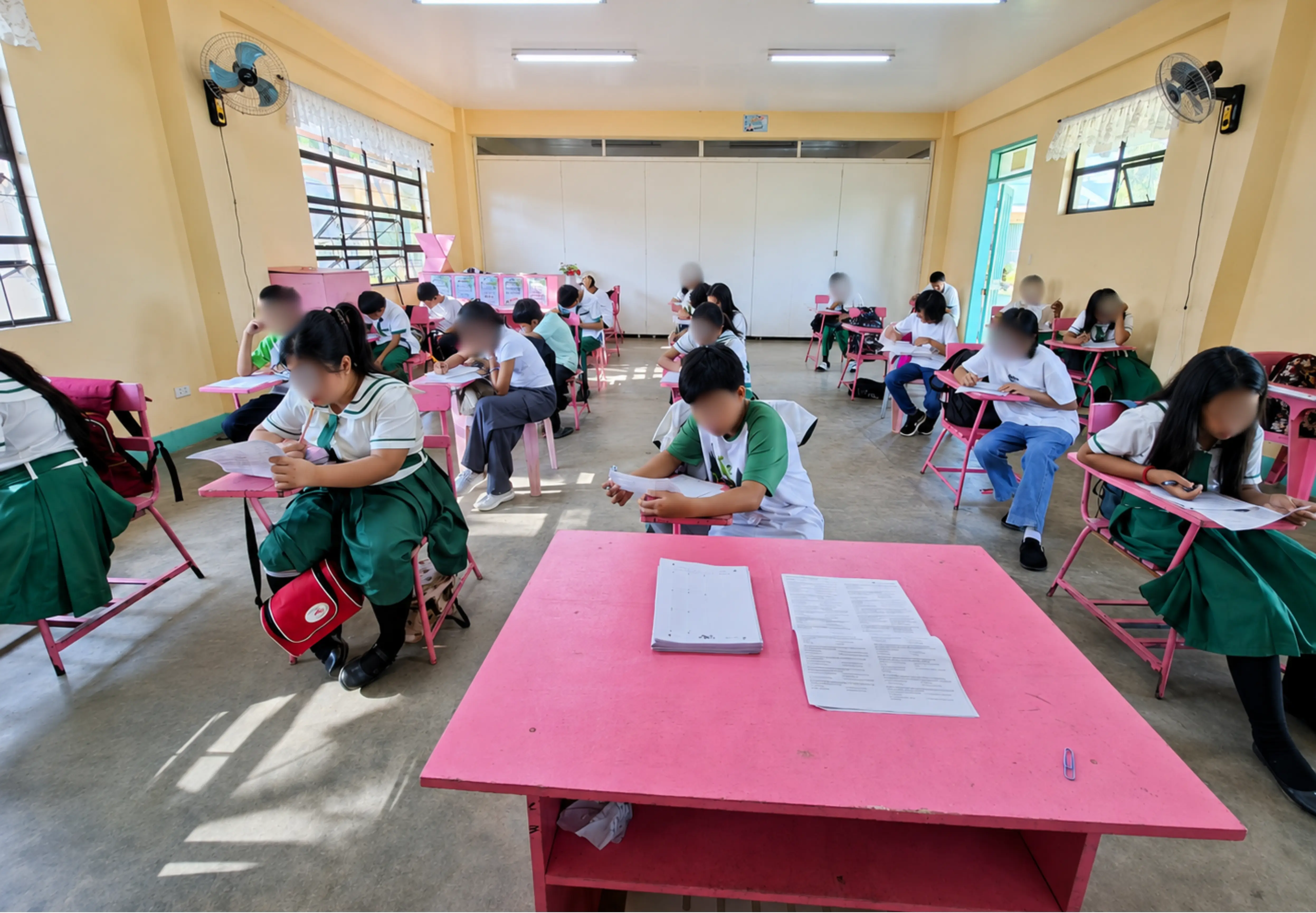

DepEd Region VII Pilot: 88–92% Reduction in Grading Time Across 3 Schools
A 3-school pilot with 78 teachers shows how automated checking using GradeChum freed up time for actual teaching.
Download Full ArticleExecutive Summary
Public secondary school teachers in DepEd Region VII typically spend the equivalent of a full working day checking exams every assessment cycle—time taken directly away from lesson preparation and students.
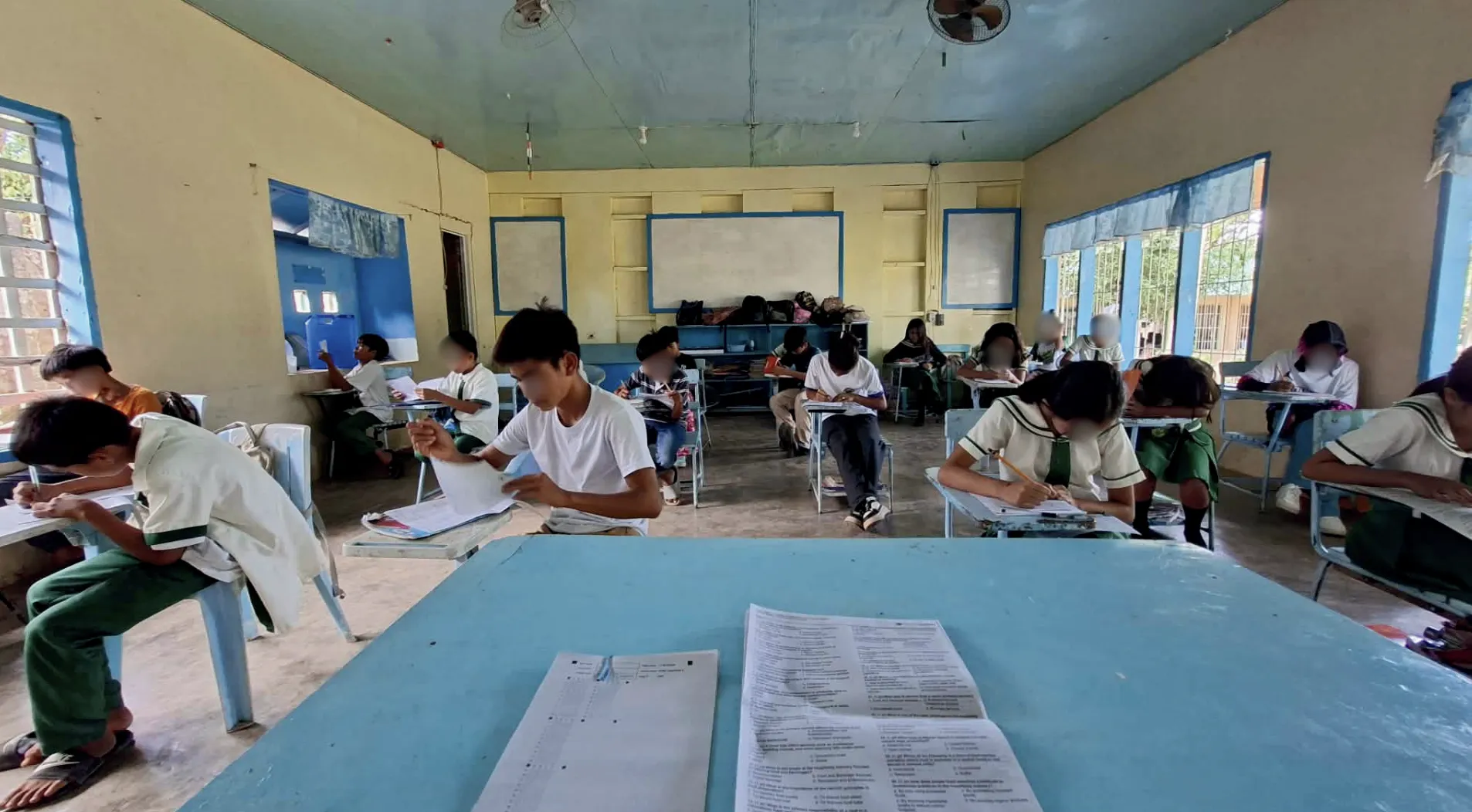
Over one grading cycle (October 2025 to March 2026), GradeChum was piloted with 78 teachers across three Cebu Province schools: Luray II National High School, San Jose National High School, and Puertobello National High School.
The purpose of the multi-school pilot was to assess the system's effectiveness in real classroom settings, particularly in reducing teacher grading workload, improving turnaround time of exam results, minimizing computation errors, and standardizing assessment processes across different public secondary school environments. The implementation covered one grading cycle and involved actual classroom use, including activity creation, scanning of answer sheets, automated checking, score verification, and export of results for class record integration.
The Weight of Manual Checking
Teachers across the three schools carry a substantial assessment workload, managing an average of 5 sections per semester with roughly 45 students per section, meaning a single teacher may check between 160 and 250 exam papers per assessment cycle.
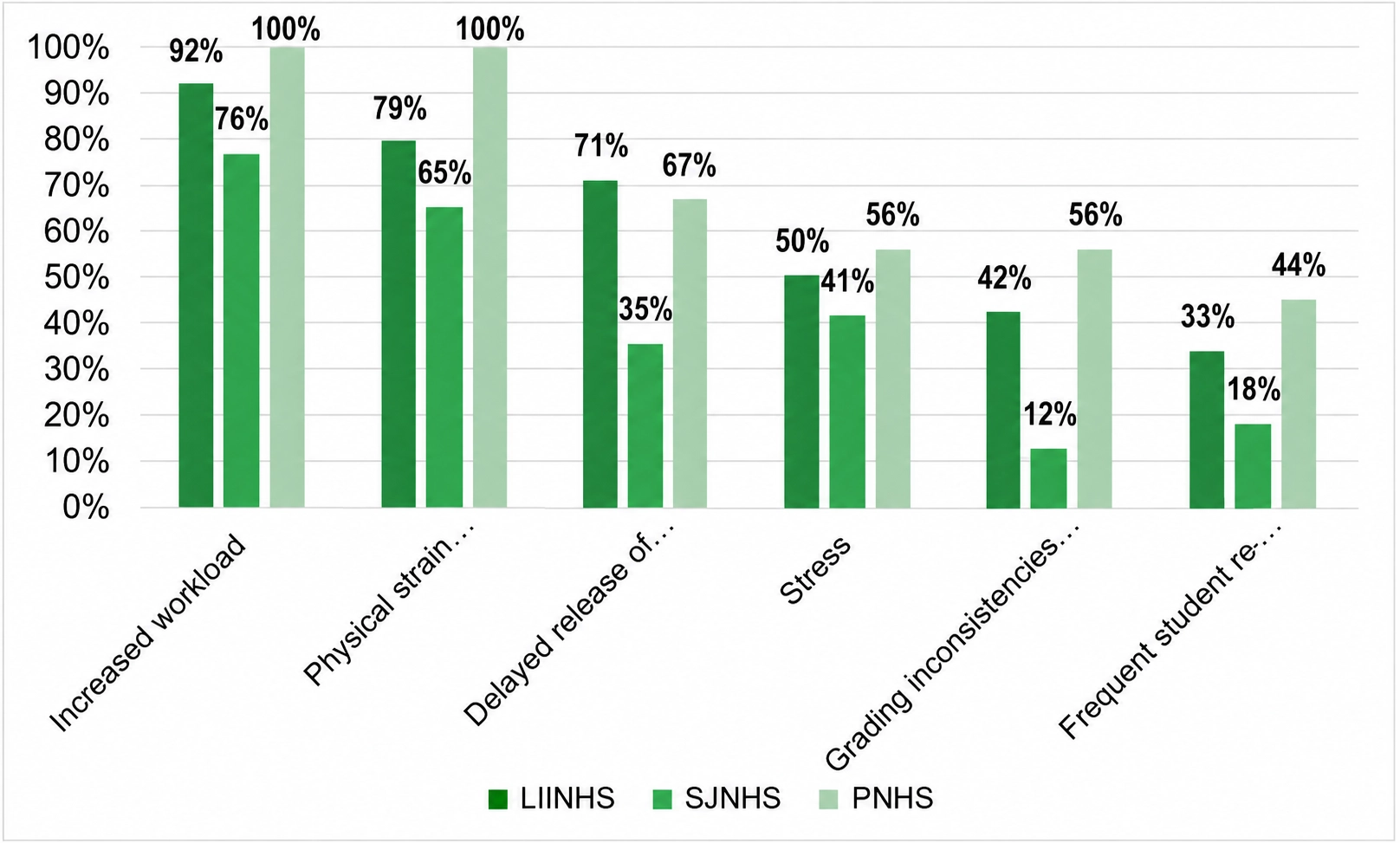
Under manual checking conditions, this workload translated into real operational strain: increased workload was flagged as a major issue by 91.67% of teachers at LIINHS, 76.47% at SJNHS, and 100% at PNHS, while physical strain such as eye and hand fatigue affected anywhere from 79.17% to 100% of teachers across the schools.
Grades were frequently delayed, with most results taking two to three days or longer to release, and 87.5% to 88.9% of teachers had to revise scores after the fact due to student re-check or regrade requests, pointing to consistent inefficiencies and inconsistencies in the manual process.
After Using GradeChum
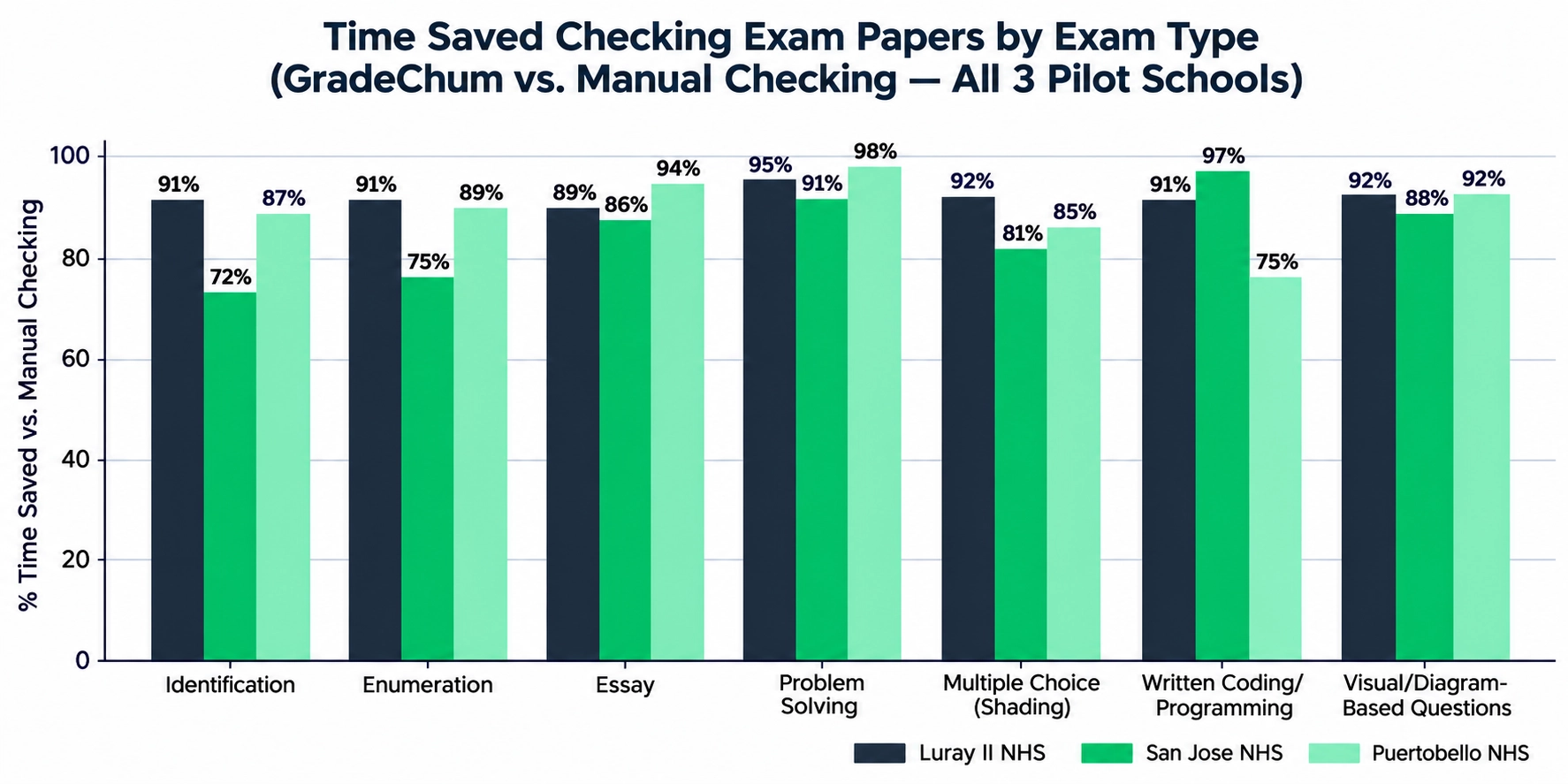
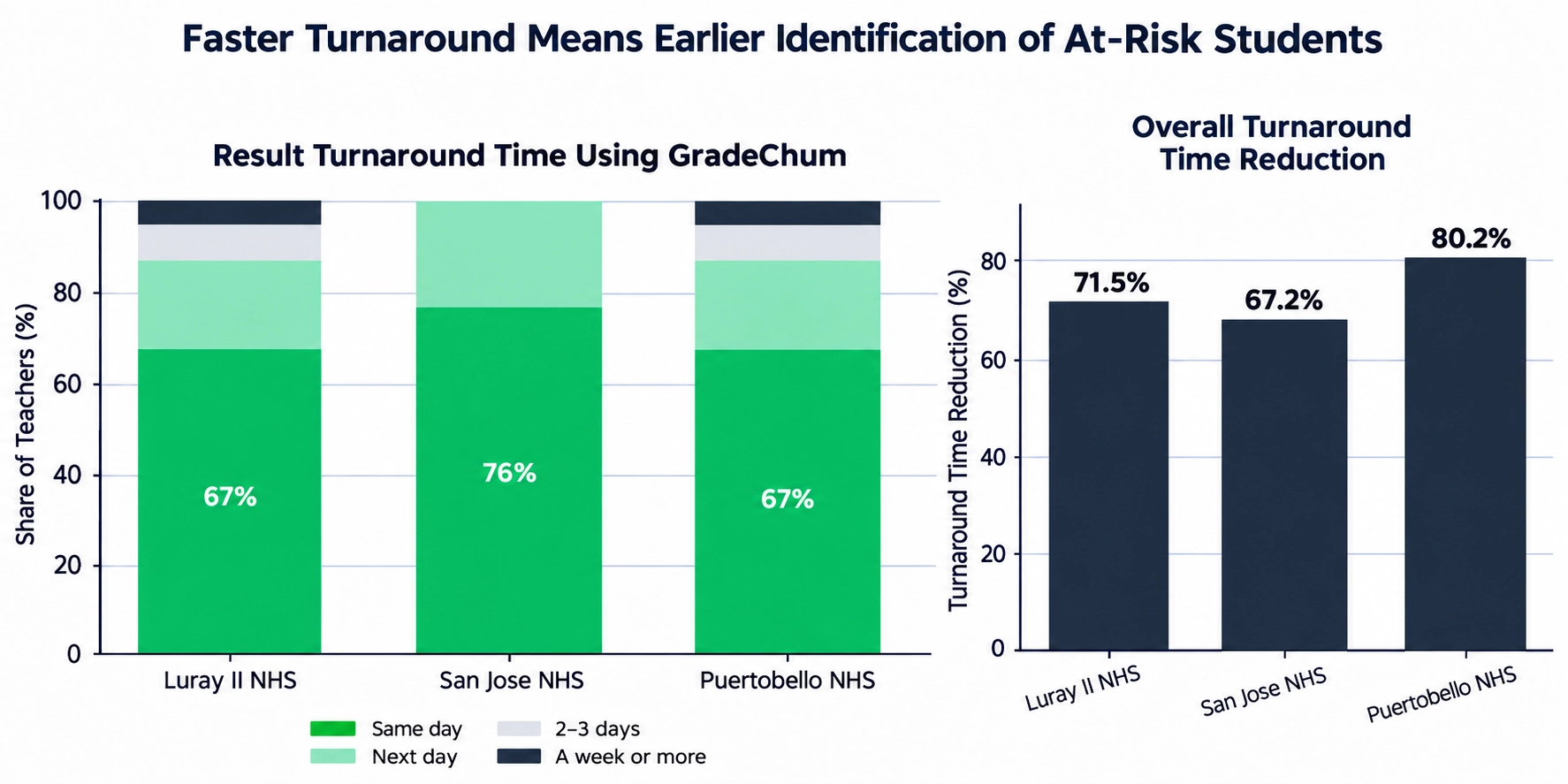
Following GradeChum's implementation, all three schools reported substantial, consistent improvements. Grading time dropped by 91.92% at LIINHS, 88.23% at SJNHS, and 91.93% at PNHS, while turnaround time for releasing results fell by 71.54%, 67.25%, and 80.22% respectively, shifting the norm from multi-day waits to predominantly same-day or next-day results.
Score overrides also declined sharply, from 87.5% down to 41.67% at LIINHS, from 76.47% down to 47.06% at SJNHS, and from 88.89% down to 44.44% at PNHS, reflecting fewer grading inconsistencies and post-check corrections.
Every single teacher surveyed (100%) across all three schools reported saving time using GradeChum compared to manual checking, and satisfaction ratings were consistently high, averaging 4.63 out of 5.0 for ease of use.
Nearly all teachers said they would use GradeChum again (96–100%), and recommendation rates hit a full 100% across every participating school. The most frequently cited benefits were reduced checking workload (94%), faster turnaround time (84%), reduced stress during checking (80%), and more time freed up for instructional planning (76%).
A central finding of the pilot is what teachers did with the time GradeChum freed up - it was reinvested into teaching and wellbeing. Across all three schools, the most common use of saved time was preparing lessons and instructional materials, reported by as many as 100% of teachers at PNHS. Teachers also used the extra time to complete administrative tasks (up to 79.17%), check other assessments (up to 66.67%), meet with students or offer consultations (up to 50%), and take short, restorative breaks (up to 100% at PNHS). This pattern shows that the efficiency gains from GradeChum translated directly into stronger instructional support rather than simply reducing hours worked.
This distinction matters for regional planning: it indicates that GradeChum's efficiency gains translate into more direct instructional and student-support time for teachers, which is consistent with DepEd's ongoing efforts, including the current three-term academic calendar, to protect and expand classroom teaching time rather than administrative workload.
Testimonials
In addition to quantitative survey responses, participating teachers provided qualitative feedback describing their experience using GradeChum during the pilot period. The testimonials below expand on the excerpts previewed in the Executive Summary, and highlight perceived ease of use, time efficiency, organization of grade tracking, and functionality features that supported classroom assessment processes.
“What I like most about GradeChum is how simple and intuitive it is to use. Everything—from tracking grades to managing student progress—is well-organized and easy to understand, so I can focus more on teaching instead of paperwork. It really saves time and reduces stress, especially during busy school weeks.”
“Lessens teacher's burden in checking papers”
“Checking problem-solving solutions can be time-consuming and tedious. With GradeChum, scores and results are generated in less than a minute. It also provides accurate and detailed feedback, especially highlighting specific areas where students can improve their answers.”
Conclusion
Findings confirmed that teachers manage multiple sections with large class sizes, resulting in heavy grading loads, delayed feedback cycles, physical strain, and frequent post-check score revisions under manual processes.
Time savings ranged from approximately 88% to 92%, turnaround time shifted from multi-day release to predominantly same-day or next-day results, and score override frequency was reduced. Teacher satisfaction ratings were high across usability, reliability, and workflow impact dimensions.
The consistent improvements observed across three DepEd Region VII schools suggest that structured digital grading systems may support workload management, instructional efficiency, and faster feedback dissemination, including earlier identification of at-risk students, while redirecting recovered time toward teaching rather than administrative work.